
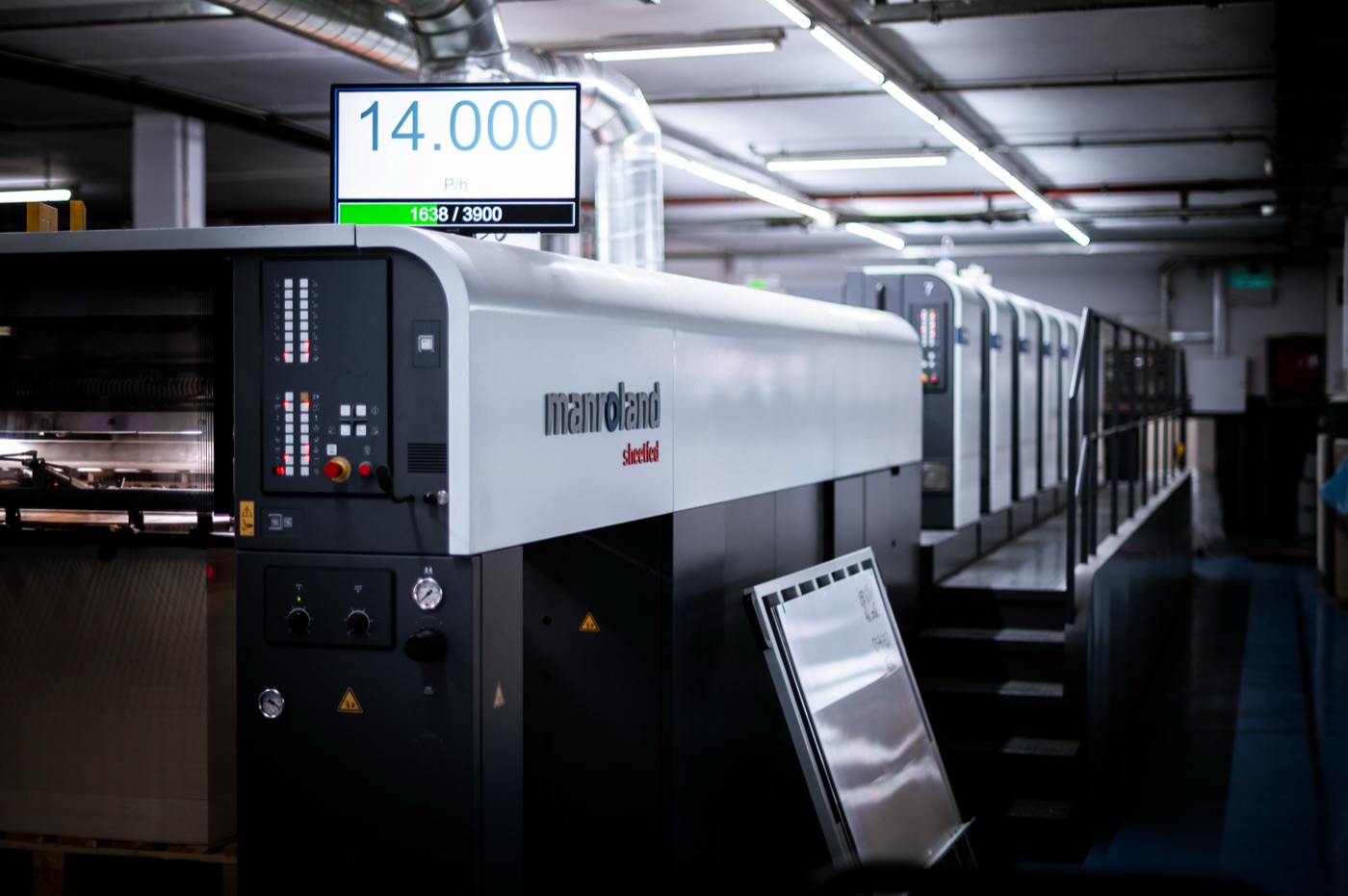
A brand color is a promise made to a shopper: the same red, the same blue, wherever the product appears. Keeping that promise is easy on one press in one building. It gets hard the moment the same packaging is produced in several plants, in several countries, at the same time. This is the multi-site problem, and it is one of the most common reasons a brand owner starts asking hard questions about color.
Why the same brand color drifts from plant to plant
No two pressrooms are identical. A job that looks perfect in one plant can miss in another because every local variable pushes the color a little:
- Different press brands and generations, each with its own inking behavior.
- Different ink sets and, often, different ink suppliers per region.
- Different paper and board, which changes how the ink sits and dries.
- Different operators, each with a slightly different idea of on target.
- Different measurement habits, from the device used to the M condition set.
None of these is a mistake on its own. Added together, they mean five capable plants each settle on their own version of correct. If the only reference is a printed sample and a trained eye, the sites will never fully converge. Color drift between plants is a systems problem, not an operator problem, which is why the fix has to be systematic. Our complete guide to closed loop color control covers how the measurement and correction loop works in detail.
What a multi-site color standard actually requires
Standardizing color across sites is less about buying identical presses and more about sharing one numerical truth. A multi-site standard rests on three pillars:
- One reference per color, expressed as spectral or Lab values with an agreed DeltaE tolerance, not as a physical sample that fades.
- One measurement method everywhere: the same geometry, the same M measurement condition, the same color bar logic in every plant.
- One correction loop per press that reads each sheet and drives it back to the shared reference automatically, so the target is enforced rather than hoped for.
The first two make the sites speak the same language. The third makes them act on it in real time. A reference that lives in a spreadsheet but is not enforced on the press is just a wish. The value appears when every press in every plant is measured against the same target and corrected to it on its own.
How closed loop makes the standard portable
Closed loop color control is what turns a shared reference into a shared result. A spectral system measures the color bar on the running sheet, compares each zone to the agreed reference, computes the DeltaE and sends corrections back to the press so the color is held to the standard through the whole tirage. Because the loop corrects to a number, not to a memory, it produces the same outcome on a Heidelberg in France and a Komori in China. The ColorLoop engine drives that correction and keeps a time stamped record of every reading. For sheetfed offset, the Offset360 bundle packages the scanning, the process control and the closed loop into one workflow, which is a practical way to give several plants the same measurement and correction stack.
The traceability side matters as much as the correction. When every plant logs each sheet against the same reference, the brand owner can see that the job stayed inside tolerance everywhere it ran, and calage is shorter because each press reaches target faster instead of chasing it by eye. Consistent measurement also cuts gache at every site, since less paper is spoiled getting to color. The key terms here, from constance couleur to DeltaE, are defined in the glossary.
One reference, every region
The multi-site problem is really a global problem. Brand owners increasingly split the same work across plants in different regions to shorten supply chains and cut freight, then expect the printed color to match plant to plant regardless of where the run happened. Packaging groups that produce across several countries, like the multi-plant converters Rutherford works with, use one closed loop reference so a carton made in Europe, in North America or at an Asian plant carries the same color. The standard lives in the shared data, which is exactly why Rutherford can deploy it on more than 1,000 systems in over 30 countries and still have every site correct to the same target. The Obeikan multi-site rollout is one example of a group aligning color across plants this way.
How do you keep brand color consistent across multiple plants?
Give every plant the same numerical reference for each color, measure it the same way in each site, and use closed loop color control on every press to correct back to that reference automatically. Consistency then comes from the shared data and the automatic correction, not from asking each operator to match a printed sample by eye.
What is multi-site color standardization?
Multi-site color standardization is the practice of making one brand color produce the same measured result across every plant that prints it. It combines a shared reference, an identical measurement method and an automatic correction loop so that color consistency does not depend on which factory ran the job. The core terms are defined in the glossary.
Can different press brands hold the same color standard?
Yes. Because closed loop corrects to a numerical reference rather than to a specific machine, presses from different brands and generations can hold the same standard. ColorLoop is press agnostic and works with Heidelberg, Komori, Koenig and Bauer, Manroland and others, so a mixed fleet across several plants can still converge on one brand color.