
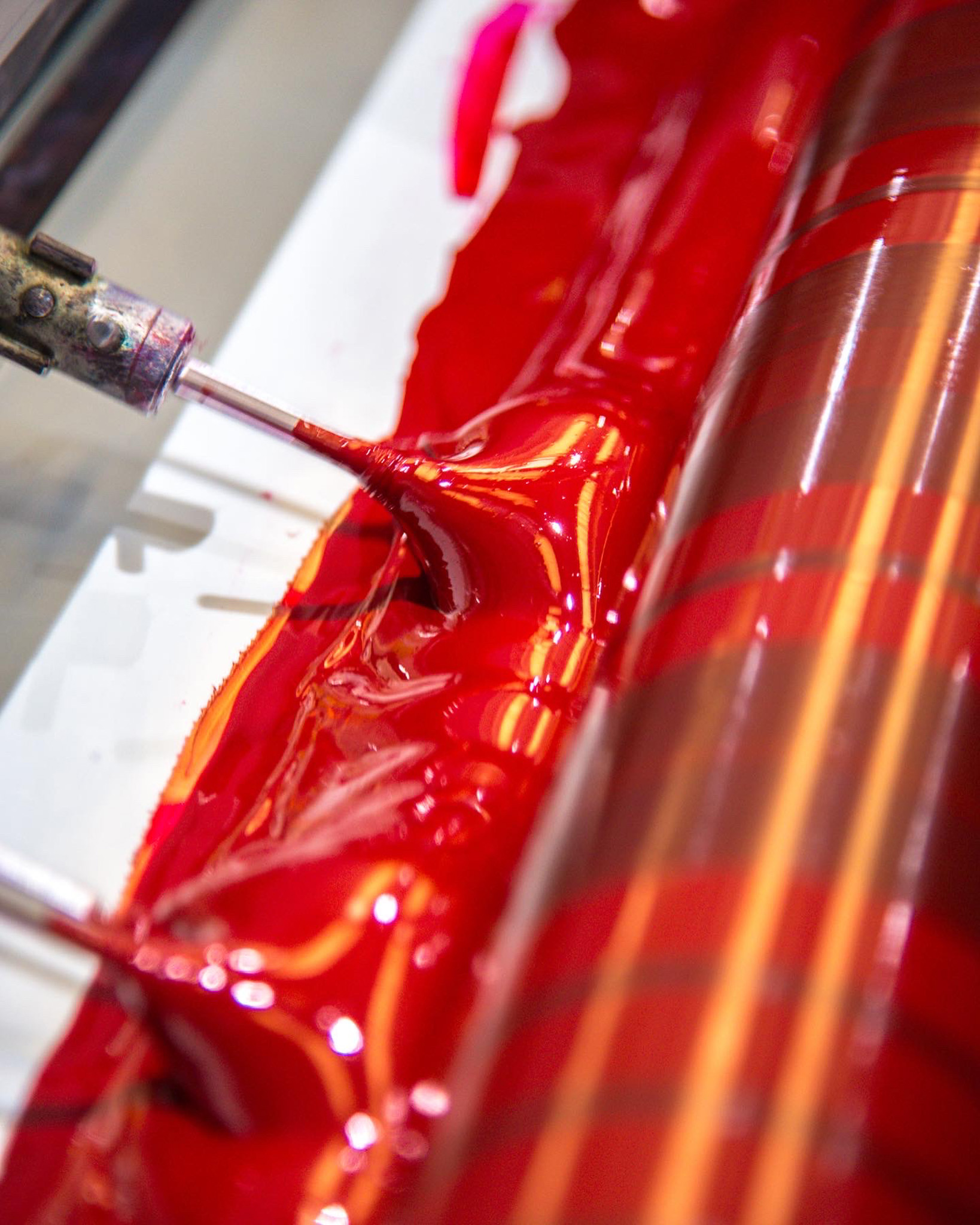
The EU Packaging and Packaging Waste Regulation applied on 12 August 2026, and the part that reaches the pressroom fastest is not recyclability grading or labelling. It is the substance restrictions. From that date, the combined concentration of lead, cadmium, mercury and hexavalent chromium in packaging cannot exceed 100 mg/kg, and food contact packaging cannot exceed 25 ppb for any individual non polymeric PFAS, 250 ppb for the sum of non polymeric PFAS, or 50 ppm for total fluorine. There is no phase in period: all three thresholds started applying on the same day.
The detail that matters for a printer is where the limit is measured. It applies to the packaging unit as a whole, which means inks, varnishes, coatings, glues and adhesives are counted with the board rather than assessed separately. A compliant carton printed with a non compliant varnish is a non compliant carton. And there is no blanket exemption for recycled content: glass has a narrow derogation for recycled cullet, paper and board do not.
PPWR compliance is written on paper and paid for on press
The result is a set of substitutions that were already under way and are now compulsory. Ink suppliers have reformulated pigment systems to stay under the metals limit. Barrier coatings built on fluorochemistry are being replaced by dispersion and bio based alternatives. Converters are pulling more recycled fibre into unchanged specifications. Every one of those changes is a compliance win, and every one of them moves color.
- New pigment chemistry changes the solid ink density needed to reach the same LAB value.
- PFAS free barrier coatings change surface energy and gloss, so an identical ink film reads differently under the spectrophotometer.
- Higher recycled content means a greyer and more variable base white, which shifts every tint printed above it.
- Different setting and drying behaviour changes trapping between units, and wet on wet trapping is where spot colors go wrong first.
- Board from a new supplier arrives with its own absorbency, so ink lay is not what the CIP3 preset expects.
Does a PPWR compliant ink set print the same as the one it replaces?
No. It is formulated to reach the same target color, not to behave the same way on press. Pigment loading, tack and setting speed all move, and that shows up as a different ink key opening for the same coverage, and a different curve across the run. The target does not change. The route to it does, and so does the number of sheets it takes to get there.
Where the cost actually lands
Makeready is where a substrate or ink change gets paid for. Ink presetting from CIP3 data is only as good as the correction curves behind it, and those curves were learned from what the press did with the previous ink on the previous board. Change both inside the same quarter and the presets open the ink keys too far or not far enough. The operator pulls more sheets before the first good one, on every job, until the curves catch up.
Twenty extra sheets per job change does not sound like much until you multiply it by the number of job changes in a short run packaging mix, at 2026 board prices. That multiplication is most of what a closed loop ROI calculation contains, and reformulation makes the multiplier bigger for as long as the materials keep moving.
How do you hold color when the substrate keeps changing?
You stop relying on presets alone and let measurement drive the ink keys during the run. Closed loop control measures the sheet, compares it against the target, and corrects zone by zone while the press is running, so a new ink or a new board is absorbed within the first few sheets instead of over the first few thousand. The complete guide to closed loop color control sets out how the loop is built, from measurement source to console interface. Measurement systems such as IntelliTrax2 or MeasureColor supply the data; the loop is what turns it into ink key movement without an operator guessing.
The documentation side, stated honestly
PPWR also requires an EU Declaration of Conformity and a technical file for every packaging type, retained for five years for single use packaging and ten years for reusable packaging, with evidence kept at component level for inks, coatings, pigments and recycled inputs. Any change of ink, coating, supplier or production site means that file has to be updated. Packaging must also carry the name and postal address of the manufacturer and the importer, so traceability now runs down to the printed unit.
Closed loop color control does not test for PFAS and does not certify a substance. It should not be sold as if it did. What it produces is the other half of the record: measured color data for what was actually printed, on which substrate, against which target, on which date, shift by shift. When a brand owner audits a supplier panel that has reformulated everything at once, that record is what separates a claim from a proof.
Which PPWR requirements apply to printers outside the EU?
All of them, if the packaging is placed on the EU market. The obligation follows the packaging, not the plant. A converter in Morocco, Turkey, China or the United States printing cartons for a European brand inherits the same substance limits and the same conformity documentation as a converter in Germany.
One specification, every plant
That is what makes this a global reformulation rather than a European one. Brand owners do not maintain two ink sets, one for Europe and one for everywhere else, when the European one is the strictest. The specification travels, and the color problem travels with it. Rutherford runs more than 1,000 systems in over 30 countries, and the same ink and coating substitutions are landing in North American pressrooms as in European ones, on presses of very different ages and generations.
The compliance file will be closed by the quality department. The color will be settled on press, one job change at a time. If you want to know whether your console can drive a closed loop before the next reformulated ink set arrives, the console eligibility check answers it from a few photographs.