
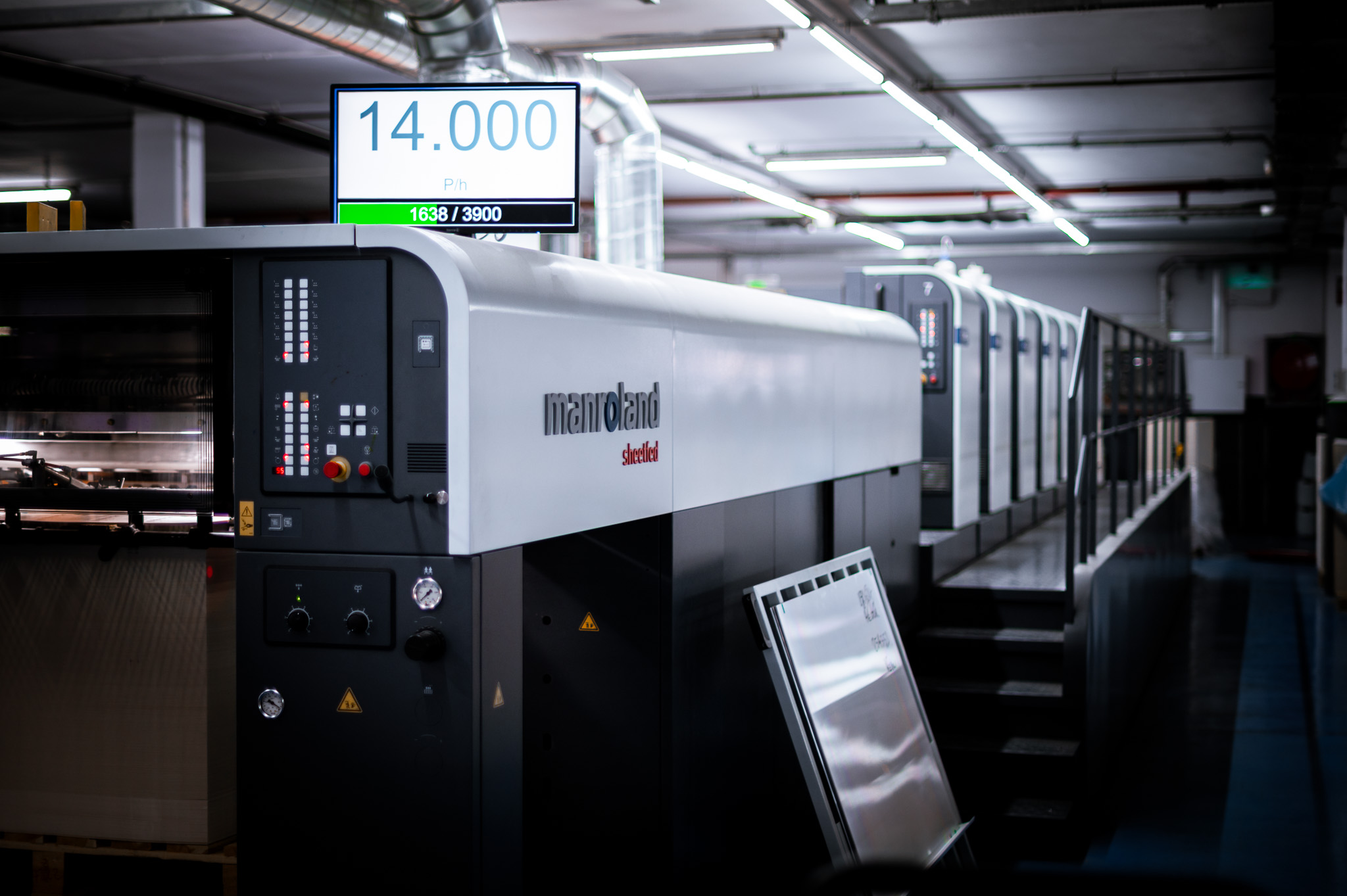
At Cartonajes Pans, five complete systems combining X-Rite IntelliTrax2 with Rutherford closed loop technology and MeasureColor are running in production on Manroland Sheetfed offset presses of different generations.
One ecosystem rather than three purchases
Most pressrooms buy color in pieces: a formulation tool here, a measurement device there, a control system later. Each works, and none of them talk to the next. What was built at Cartonajes Pans is the opposite, a chain where every step feeds the one after it.
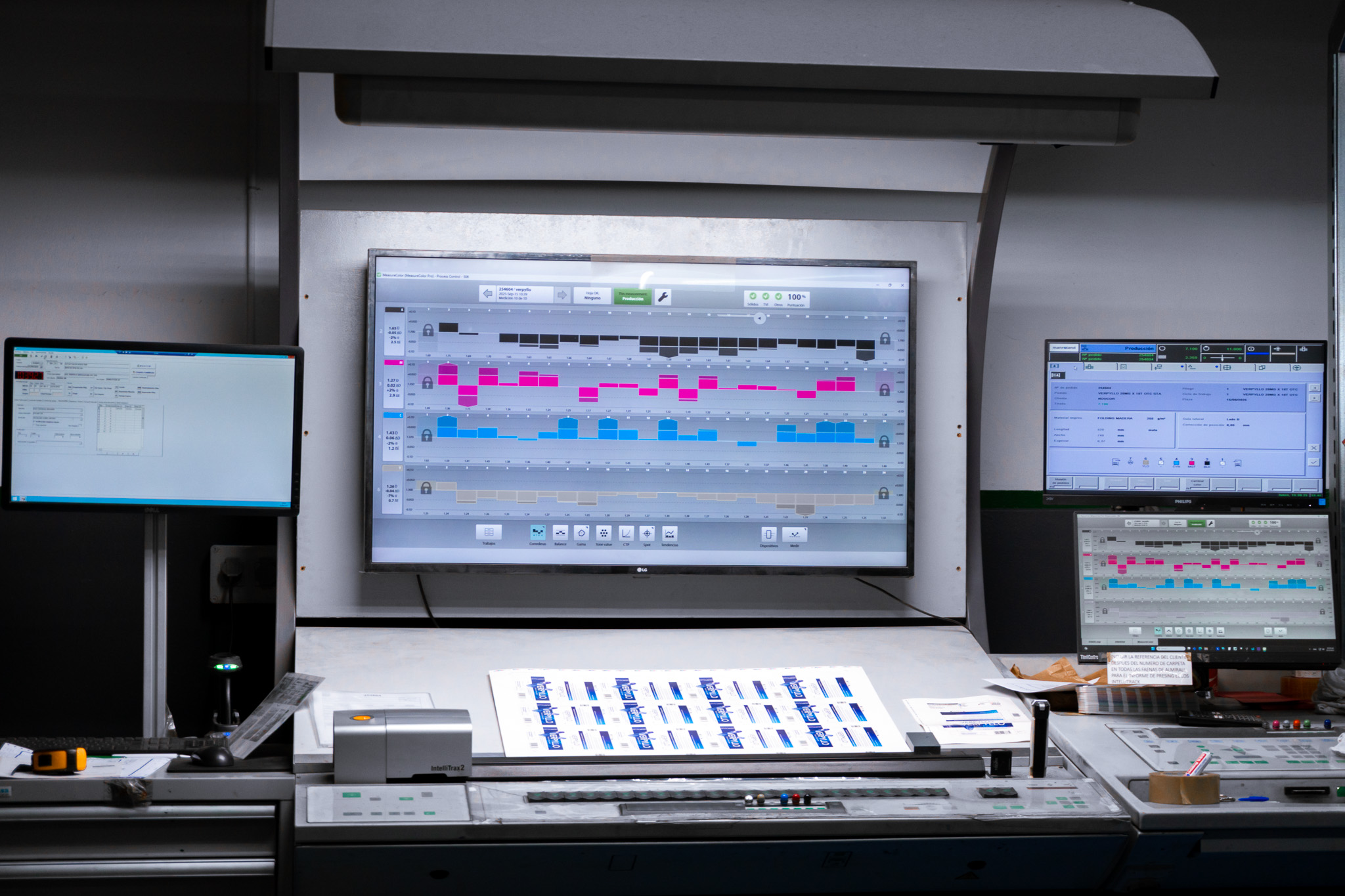
- Ink formulation with X-Rite InkFormulation, so the ink that arrives at the press is the ink the standard assumes
- Automated spectral measurement of the sheet with IntelliTrax2
- Process control and reporting with MeasureColor
- Closed loop ink key correction at the console with Rutherford ColorLoop
The value is in the joins. A measurement that nobody acts on is a report. A correction based on an ink whose behaviour is unknown is a guess. Connected end to end, the same reference travels from the ink kitchen to the ink keys.
Why presses of different generations is the interesting part
A pressroom rarely renews its fleet in one go. Machines arrive over the years, and each generation has its own console, its own habits and its own operators. Holding one color standard across that mix is harder than holding it on a new press, and far more useful.
It is also the case for closed loop as a retrofit rather than a replacement. What decides eligibility is not the age of the press but what its console exposes: an ink key interface that accepts corrections, a measurement source, and a mechanical baseline in reasonable condition.
Can closed loop run on presses of different ages in the same pressroom?
Yes, and that is usually the point. Each press keeps its own console and its own operators, while the color reference and the tolerance are shared. Cartonajes Pans runs five systems across Manroland Sheetfed machines of different generations on that basis.
What does ink formulation have to do with press side color control?
More than most people expect. Closed loop corrects ink film thickness through the ink keys, so it can only work within what the ink itself can reach. When formulation is characterized with the same instruments used at the press, the correction and the ink agree with each other instead of fighting.

Thank you
Our thanks to the whole Cartonajes Pans print team for their professionalism and for agreeing to share their experience on camera, and to Solida Color, our partner in Spain, and Oscar Miravitlles for the on-site expertise and support.
The testimonial video filmed with the team is coming soon.
Would this work on your presses?
The honest answer is that it depends on your consoles, and it takes a day to find out rather than a meeting. Send a few photos of your console from your phone and we will tell you whether your presses qualify, within one business day. It is free, and we say no when the answer is no. Check your console, or read the complete guide to closed loop color control.