
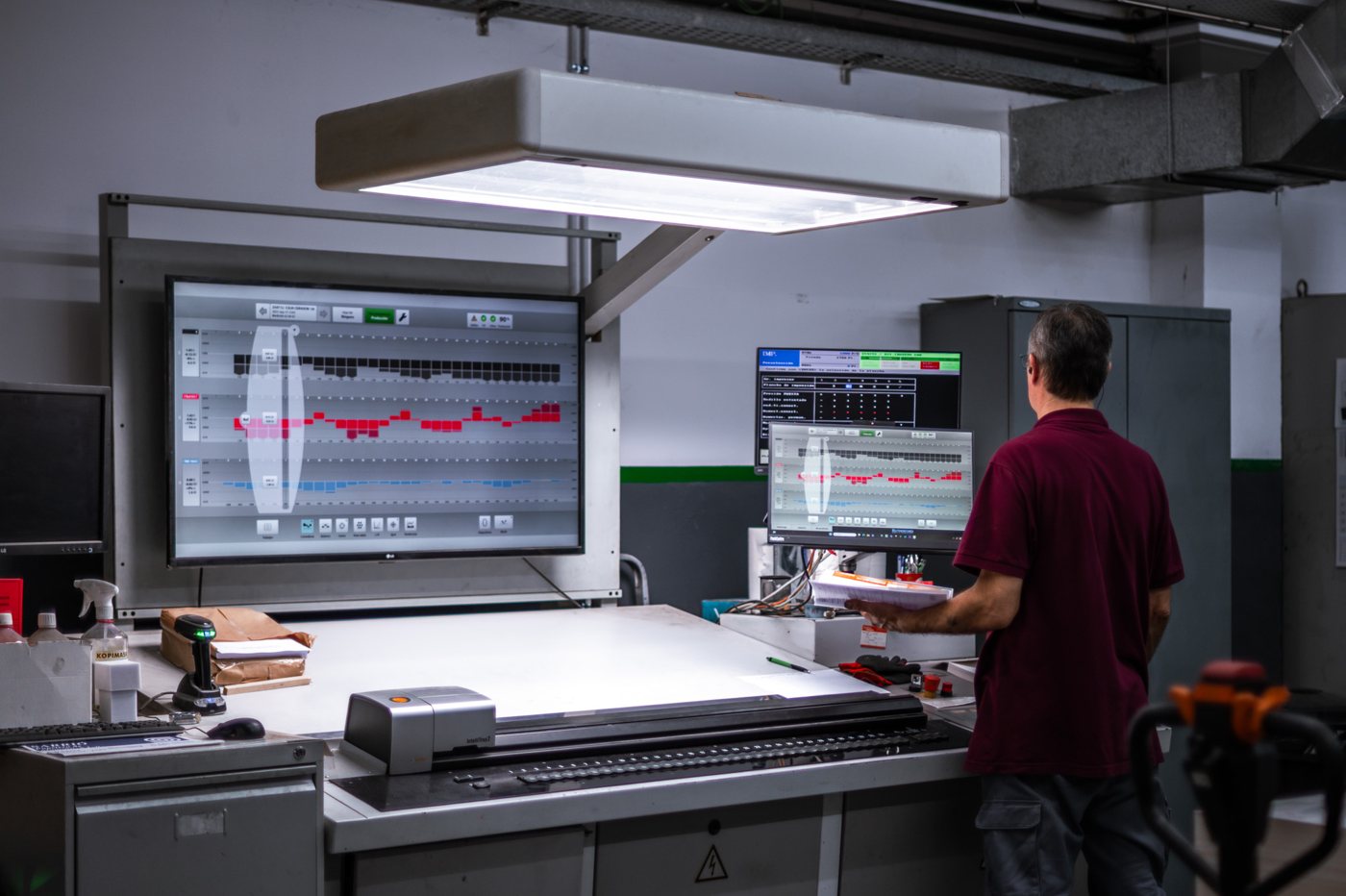
DeltaE is how the print industry puts a single number on the difference between two colors. But the right answer to what DeltaE is acceptable depends entirely on what you are measuring and who is judging it. Here is a practical guide.
What DeltaE measures
DeltaE is the distance between two colors in a color space. The larger the number, the more visible the difference. As a rough anchor, a DeltaE around 1 is barely perceptible to a trained eye, while larger values become obvious side by side.
DeltaE76 versus DeltaE2000
DeltaE76 is the original, simple Euclidean distance, but it does not match human perception evenly across the spectrum. DeltaE2000 (dE00) corrects for that and is the modern default for print tolerances. Always state which formula a tolerance refers to.
What tolerance is realistic
- Process colors to ISO 12647: primaries within a few dE00, tightening as you approach the target.
- Brand and spot colors: brand owners often ask for dE00 of 2 or tighter on critical colors.
- Substrate matters: an uncoated or low-quality stock makes very tight tolerances physically harder to hold.
How to hold tolerance in production
Pick the formula and target, print a color bar on every sheet, and measure continuously rather than spot-checking. Closed-loop control corrects ink zones automatically as the run drifts, which is what keeps DeltaE inside tolerance from start to finish.