
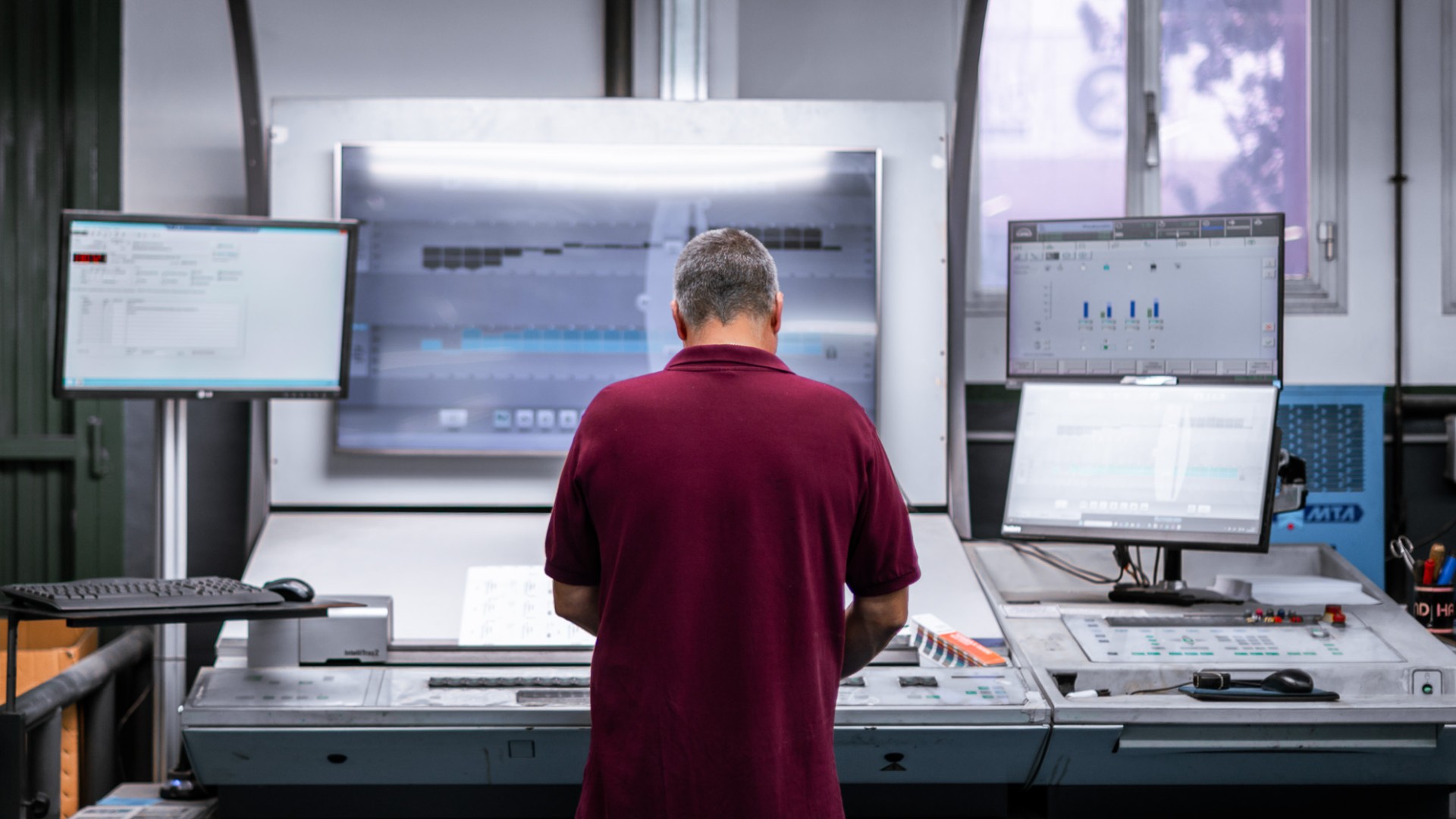
There is a persistent assumption in the industry that modern color control requires a modern press. It is an expensive assumption, because it turns a retrofit decision into a capital investment decision, and most presses that could be upgraded today get written off instead.
The reality is narrower and more encouraging: closed-loop color control needs a way to read the sheet and a way to write back to the ink keys. Everything else is integration work.
The three things a console has to provide
1. An ink-key interface that accepts corrections
This is the decisive one. The loop measures the printed sheet, calculates the correction, and has to push that correction to the ink keys. A console that can only display values, without accepting them from outside, cannot close the loop.
Most press consoles built for ink-key presetting already have this interface, because it is the same channel that CIP3 and CIP4 presetting data travels through. If your press accepts presetting data from prepress, the write path very probably exists.
2. A measurement source
The loop needs colorimetric or densitometric readings of the sheet. That can come from an inline system, from a scanning spectrophotometer on the console, or from a handheld device used at defined intervals. The tighter the measurement loop, the tighter the color control, but a scanning device on the console is enough to run a real closed loop.
3. A stable mechanical baseline
This is the one nobody mentions in a brochure. A loop corrects the ink keys; it cannot compensate for worn rollers, damaged blankets or a failing dampening system. On a press with unresolved mechanical problems, closed-loop control will faithfully chase a moving target and everyone will conclude the technology does not work.
What the major consoles look like in practice
Console generations vary, and the specific model always has to be confirmed, but here is the general picture by manufacturer:
- Heidelberg: CP Tronic, CP2000 and Prinect Press Center generations, on Speedmaster SM and XL presses
- Komori: PQC-S and KHS-AI, on Lithrone G and GL class presses
- Koenig & Bauer: ErgoTronic and ColorTronic, on Rapida presses
- Manroland: Pecom and ColorPilot, on Roland 700, Roland 900 and Evolution presses
- Mitsubishi: IPC press consoles, on Diamond series presses
- Ryobi: PCS print control consoles, on 750, 920 and 1050 series presses
- Goss: Omnicon press controls, on web offset presses
- Presstek: DI press controls, on Presstek DI presses
Each of these has a dedicated compatibility page with the specific questions that come up for that manufacturer: Heidelberg, Komori, Koenig & Bauer, Manroland, Mitsubishi, Ryobi, Goss and Presstek.
What does not disqualify a press
Several things printers assume are blockers usually are not:
- Age. A press from the 2000s with a maintained console is often a better candidate than a newer press with a closed proprietary system
- Number of units. Four, five, six, eight units all work; the loop scales with the ink zones it has to drive
- Existing measurement hardware. If you already own a scanning device, it can often be reused rather than replaced
- Mixed brands in the same pressroom. Each press is assessed on its own console
What does disqualify one
Being straight about this saves everyone time. A press is a poor candidate when the console is fully closed with no documented interface, when the ink-key actuators are worn to the point of not holding a setting, or when the mechanical baseline is so unstable that the loop would be correcting for maintenance problems rather than color. In those cases the honest answer is to fix the press first, or to accept that this particular machine is not the right one to start with.
How to find out in a day, without a site visit
The eligibility check exists precisely because none of the above can be settled from a brochure. It runs from a phone: photographs of the console in full view, the inside of the cabinet, the ink-key row and the machine plate. Those four images are enough to identify the console generation and the interface it exposes.
The answer comes back within one business day and says whether the press qualifies for closed-loop color control on its existing measurement setup, or for a complete bundle including measurement hardware. It is free, and it commits you to nothing, including when the answer is no.
Background reading on what the loop actually does once it is installed: closed-loop color control explained.